
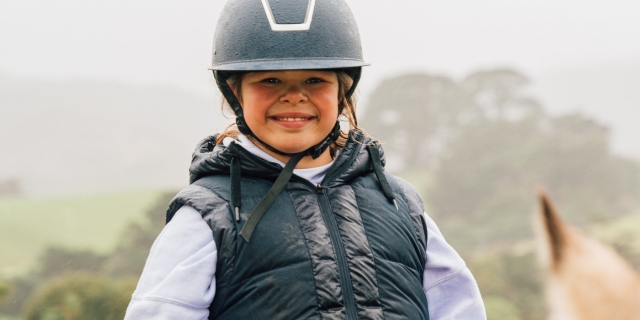
Growing Confidence One Milestone at a Time
Riding Helps Livvy tie her shoelaces. It’s Not Just pony rides in paddocks
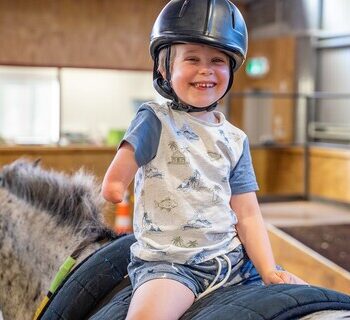
Therapeutic horse riding helps Livvy build the strength, coordination and confidence to do more for herself every day. Every ride develops the motor skills she needs to achieve everyday milestones, like tying her own shoelaces.
Livvy is a bright, determined nine-year-old who loves chocolate, adores her dog Bundee and enjoys spending time with her big brothers, Harry and Angus. Like many children her age, she’s learning new skills every day and growing in confidence as she becomes more independent.
At New Zealand Riding for the Disabled (NZRDA), every riding session is carefully designed to help Livvy achieve those everyday milestones that many of us take for granted. Working alongside her teacher and Individual Education Plan (IEP), her coach tailors every activity to support the skills she uses both in the classroom and at home, helping her build the confidence to participate more fully in everyday life.
One of Livvy’s biggest goals is developing the fine and gross motor skills, coordination and motor planning needed for everyday tasks. Things like writing, getting dressed, feeding herself and eventually tying her own shoelaces all rely on the brain and body working together smoothly. Through therapeutic horse riding, these important skills are developed in a way that feels exciting, engaging and fun.
A key part of Livvy’s programme is the movement of the horse itself. As the horse walks, its rhythmic, repetitive, three-dimensional movement (rotational, lateral and anterior-posterior) closely mirrors the movement of the human pelvis during walking. Every stride encourages Livvy to activate her core muscles, maintain her balance and continually adapt her posture as the horse moves beneath her. This unique movement provides rich sensory input that supports body awareness, coordination and motor control while strengthening the foundations for everyday movement.
Riding also engages all of Livvy’s senses. Throughout every session she is constantly interpreting what she sees, hears and feels while making decisions, solving problems and planning her next movement. These experiences strengthen sensory processing, concentration and learning in ways that are difficult to recreate in a traditional therapy environment.
One of the most important therapeutic activities Livvy practises is crossing the body’s midline -reaching one hand across to the opposite side of her body while maintaining her balance on a moving horse. Although it looks like she’s simply playing games, these carefully planned activities encourage both sides of her brain to work together, strengthening motor planning, coordination and functional movement patterns that support everyday tasks.
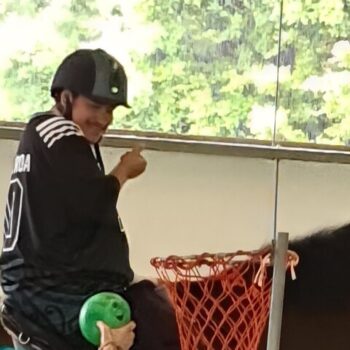
For Livvy, that might mean reaching across to collect letters before posting them into a mailbox, throwing beanbags through hoops or shooting basketballs while her horse continues to walk. Every activity requires her to stabilise her trunk, control her posture, judge distances, coordinate her hands and eyes and carefully plan each movement. To Livvy, they’re simply enjoyable games. To her coach, every challenge is another opportunity to build the skills she needs to become more independent.
After every session, Livvy’s coach and ride team review her progress and carefully plan the next week’s activities, continually adapting her programme to build on her strengths while providing just the right level of challenge. Every ride is individually designed to help Livvy succeed.
The progress Livvy is making extends well beyond the arena. As her coordination, balance and confidence continue to improve, so too does her ability to manage everyday tasks at home and participate more confidently at school. Milestones like tying her own shoelaces, writing more confidently, getting dressed independently and taking on new challenges become achievable because of the hundreds of purposeful movements she practises every week.
For Livvy’s family, the benefits are felt in unexpected ways too. Riding is physically demanding, and after a session she is often happily tired, settling more easily and sleeping soundly through the night.
Livvy’s greatest achievements aren’t measured by how well she rides.
They’re measured in every new skill she masters, every challenge she tackles with confidence and every step she takes towards greater independence. Because at NZRDA, therapeutic horse riding isn’t simply about learning to ride a horse.
It’s about helping children like Livvy discover they can do more than they ever thought possible.
Every milestone Livvy achieves is supported by a carefully planned therapeutic programme. What looks like fun on horseback is actually a series of purposeful activities designed to strengthen the coordination, confidence and everyday skills she needs to become more independent.
Behind every NZRDA programme is a nationally governed framework of quality assurance, coach training and continuous improvement. All NZRDA coaches hold recognised qualifications, undertake ongoing professional development, and deliver programmes in accordance with nationally recognised standards that are independently audited each year. This ensures every rider receives safe, evidence-informed therapeutic horse riding delivered by skilled professionals, well-trained volunteers and carefully selected horses.
Discover how NZRDA is changing lives in your community. Find your nearest local group to learn about therapeutic horse riding, volunteering, and other ways you can get involved. (LINK TO FIND YOUR LOCAL RDA)



Leave a Reply
You must be logged in to post a comment.